We are pleased to announce LSM v4.2, introducing a new Enterprise Quality Control and Calibration workbench for LabCollector LIMS. This release connects QC plans, calibration runs, laboratory instruments, analytical batches and customer results within a single controlled workflow — replacing disconnected spreadsheets and manual checks with a traceable, integrated quality process.
From QC Planning to Customer Results
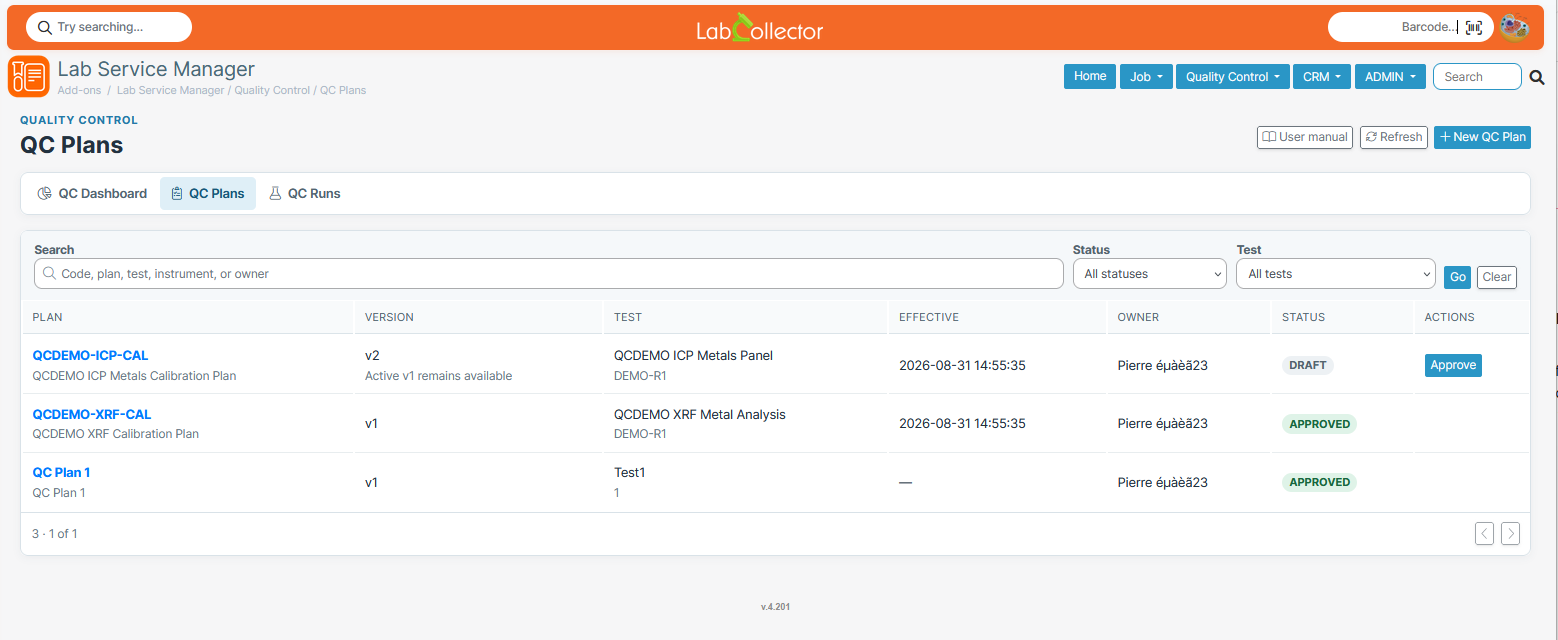
Laboratories can now create version-controlled QC plans defining:
- Standards, blanks, controls and replicates
- Required instruments and reference materials
- Run sequences and recurring checkpoints
- Acceptance criteria and calculation rules
- Validity periods and usage limits
- Review, approval and activation requirements
Approved plans remain available while future revisions are drafted. When a replacement is approved, the previous version is retired without compromising historical runs.
Controlled QC and Calibration Runs
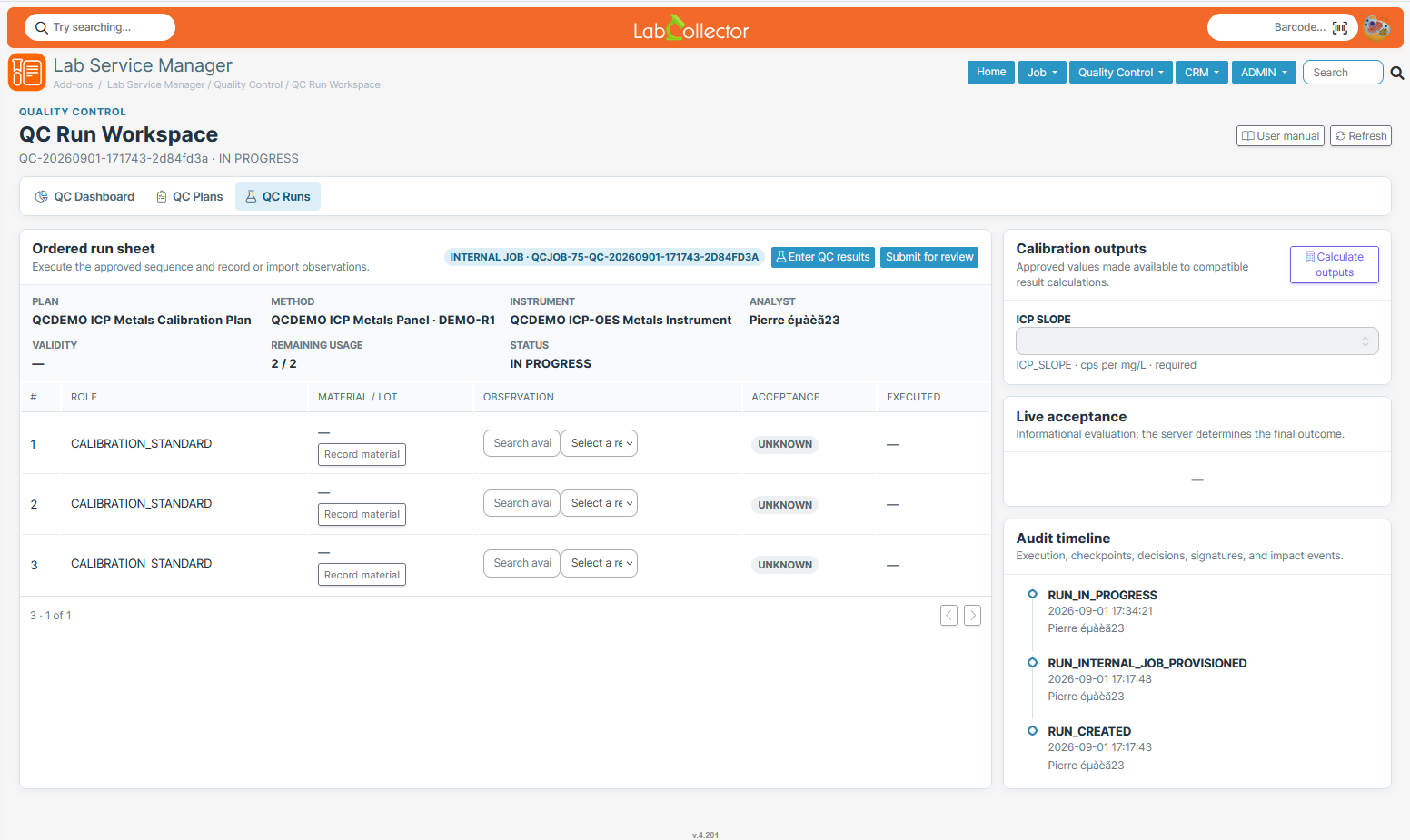
The new QC Run Workspace guides analysts through execution:
- Generate fresh internal QC jobs and samples
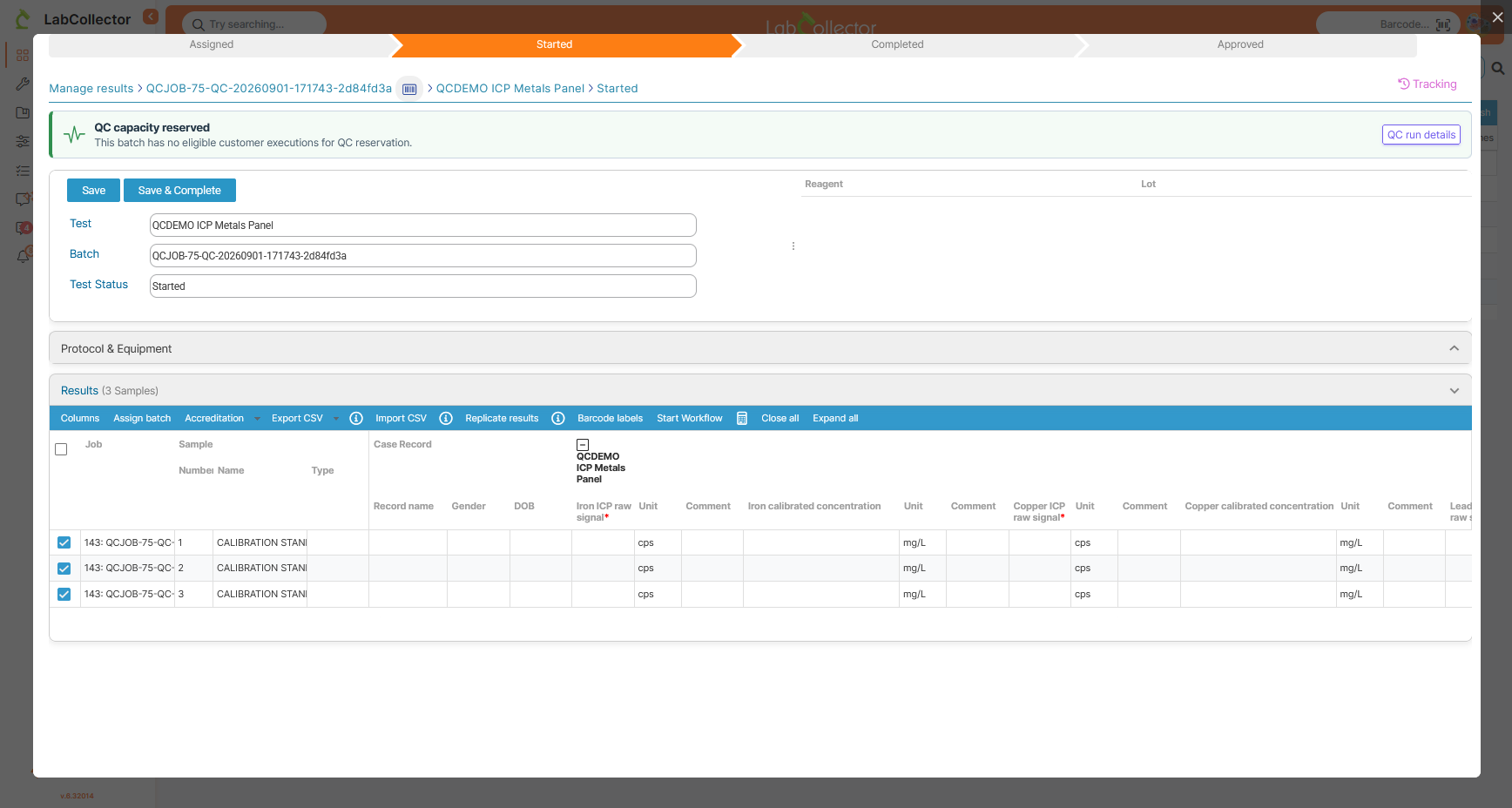
- Enter or import results using standard LSM workflows
- Record materials, lots and certificate values
- Review each reference as Pass or Fail
- Reanalyse failed references without losing previous evidence
- Exclude unsuitable references with authorization and justification
- Calculate governed outputs
- Submit runs for review, approval and activation
Every important action is recorded in the audit trail.
Calibration Outputs in Customer Calculations
Approved QC outputs can be used directly in customer-result formulas through controlled variables such as:
{QC:XRF_FE_FACTOR}
LSM resolves each variable from the QC run assigned to the relevant batch, assay and instrument. Supported calculations include:
- Recovery
- Correction factors
- Mean and standard deviation
- Slope and intercept
- R²
- Minimum and maximum
- Sequence-specific correction factors
Raw numerical precision is retained for calculations, while normal parameter settings control displayed rounding.
Reference-Level Acceptance
Plans can require an explicit Pass or Fail decision for each calibration reference. They can also define the minimum number of accepted references needed to calculate a factor — only accepted references contribute to governed averages.
A failed reference must be resolved by either:
- Creating a fresh, traceable reanalysis; or
- Recording a justified exclusion by an authorized user
This provides flexibility without weakening traceability.
Batch-Level QC Governance
LSM v4.2 introduces strong links between analytical batches and QC runs. Before customer results can progress, LSM verifies:
- Required QC coverage
- Instrument compatibility
- Run validity
- Available capacity
- Checkpoint status
- Factor availability
- Assignment consistency
A single assay can be governed by separate QC runs for different instruments. Associations remain attached to the customer executions as permanent evidence. When a run no longer has sufficient capacity, LSM blocks the affected work and guides users toward preparing another run or splitting the remaining samples into a new batch.
Reusable Calibration and Batch Correction
Two operating models are supported:
- Reusable calibration — one approved run can serve multiple compatible batches until its validity or capacity is exhausted.
- Batch correction — the QC run and its factors are permanently associated with one analytical batch.
Correction factors can follow strategies such as:
- Last accepted reference
- Mean of accepted references to date
- Final accepted run mean
This supports workflows where a reference measured after a defined number of customer samples becomes effective for the following sequence.
Quality Review and Impact Management
Authorized reviewers can inspect:
- Run configuration and execution
- Source observations
- Reference decisions
- Material and certificate evidence
- Calculated outputs
- Acceptance rules
- Checkpoints
- Audit history
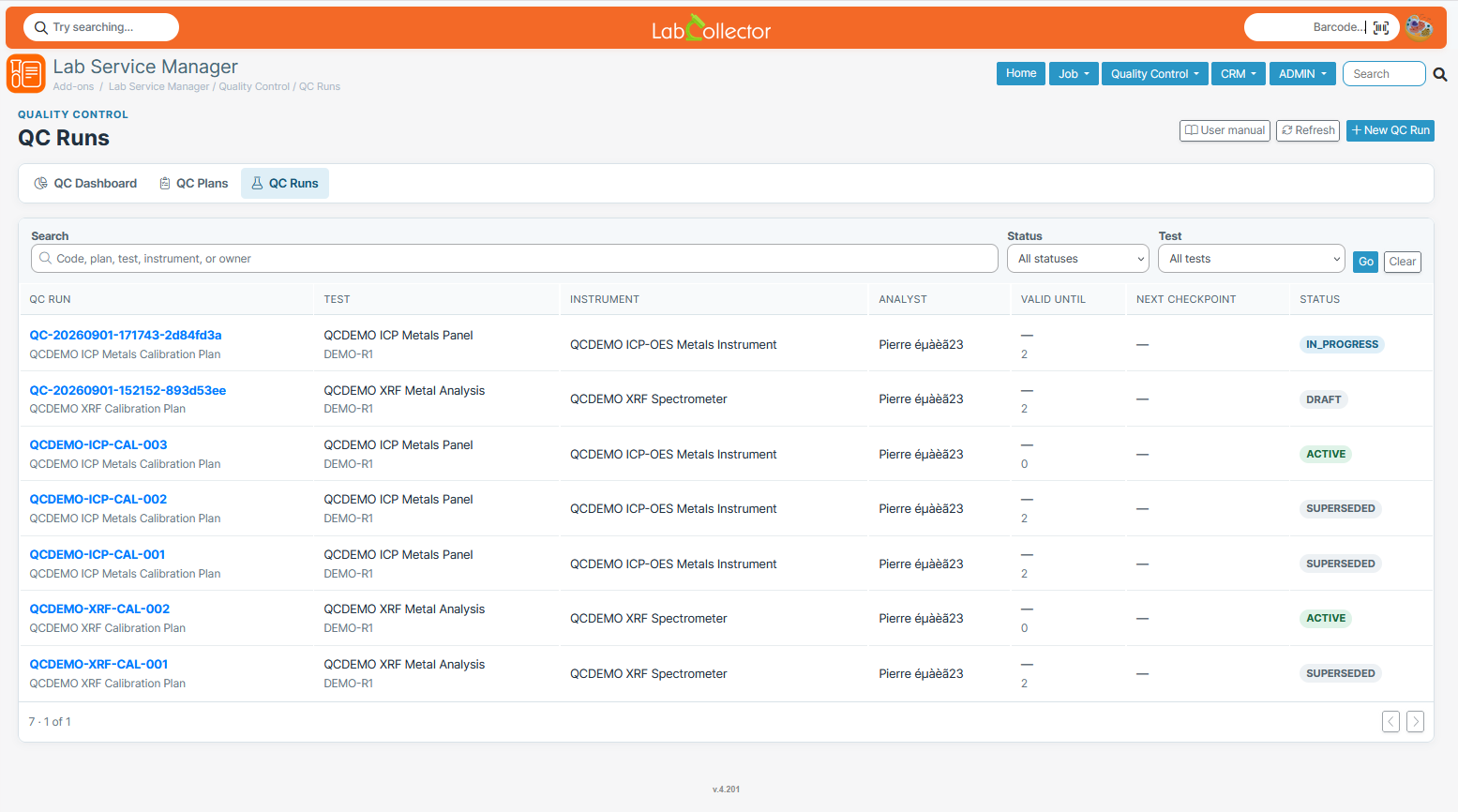
If an active QC run later fails or becomes unsuitable, LSM can identify potentially affected customer results and support documented impact assessment.
Built for Controlled Laboratory Environments
The new workbench includes:
- Granular permissions
- Separation of duties
- Mandatory reasons for controlled actions
- Immutable source-result snapshots
- Optimistic locking and transactional updates
- Audited QA overrides
- Multilingual interfaces
- A built-in HTML user manual
- Demonstration data for evaluation and training
Available in LSM v4.2
Enterprise QC and Calibration Management is available as an optional feature in LSM v4.2 for LabCollector LIMS. It brings calibration evidence, analytical execution and customer reporting together — helping laboratories replace disconnected spreadsheets and manual checks with a traceable, integrated quality workflow.
Ready to see it in action? Visit LabCollector to learn more about LSM v4.2 and how the new QC & Calibration workbench can strengthen your laboratory's quality process.
 English
 French
 Spanish
 Portuguese
 Italian
 Polish
 German
 Dutch
Dutch Danish
 Swedish
 Greek
Greek Norwegian
 Finnish
 Romanian
 Hungarian
 Czech
Czech Slovak
 Hebrew
 Arabic
 Japanese
 Korean
 Ukrainian
 Latvian
 Turkish
 Croatian
 Chinese (Simplified)
 Bulgarian